Showing posts with label Fuji Gi. Show all posts

Wednesday, June 7, 2017

Fuji Elemental Gi Review

Hello All!

Fuji sent me their new Elemental gi to review. Read below for my thoughts as I put it through the paces.

Just out of the package!
Newly arrived


The Essentials
Elemental
·      Lightweight Pearl Weave (1 lbs & 10 oz; 743 g) ; My best estimate is 325 - 350 GSM
·      Rubber collar with a cotton/poly blend body
·      Cotton pants (13 oz; 380 g)
·      Bungee cord drawstring (is there any other type at this point?)
·      Total gi weight: 2 lbs & 7 oz; 1123 g

For comparison sake:
Sekai:
·      Cotton gi top, pearl weave (2 lbs & 6 oz; 1088g); My best estimate is 450 -500 GSM
·      Rip stop pants (1 lbs & 2 oz; 501g)
·      Bungee cord drawstring
·      Total gi weight: 3 lbs & 8 oz; 1589 g

Suparaito:
·      Cotton gi top, pearl weave (1 lbs & 15 oz; 889 g); My best estimate 400 -425 GSM
·      Collar material is rip stop
·      Rip stop pants (1 lbs & 2.5 oz; 523 g)
·      Bungee cord drawstring
·      Total gi weight: 3 lbs & 1.5 oz; 1412 g

*Confused as to how a gram can be visually quantified? Any U.S. minted bill is about 1 gram. Are you at the strip club with $50 in $1 bills? You got 50 grams in your hand. Strippers not your thing? At 14% saturation, you would find about 45-55 grains of rice in a gram.

About 1g of rice
* A couple notes on gi weights: 1) The gis were washed and line dried for 48 hours before weighing. They felt dry to the touch upon weighing, though I am sure the Iowa climate could account for a shift in moisture retention that could change the measured weight of the gi. 2) I could not find a GSM (Grams per Square Meter) for any of the jackets. However, I did have one for another A2 Fuji. I assumed they all used about the same amount of material. I got the weight on the older A2/divided it by the GSM and came up with 2.2127 meters of fabric. I then used this number to get the GSM estimates for all 3 jackets. 3) Finally, I have no idea how much dyeing fabric increases weight. It may be that the dye in a black gi adds to the overall weight of the gi (resulting in a heavier black or blue gi than a white gi)…no clue.  I mention this because it is a really rough estimate. So, interpret findings with a grain of salt.

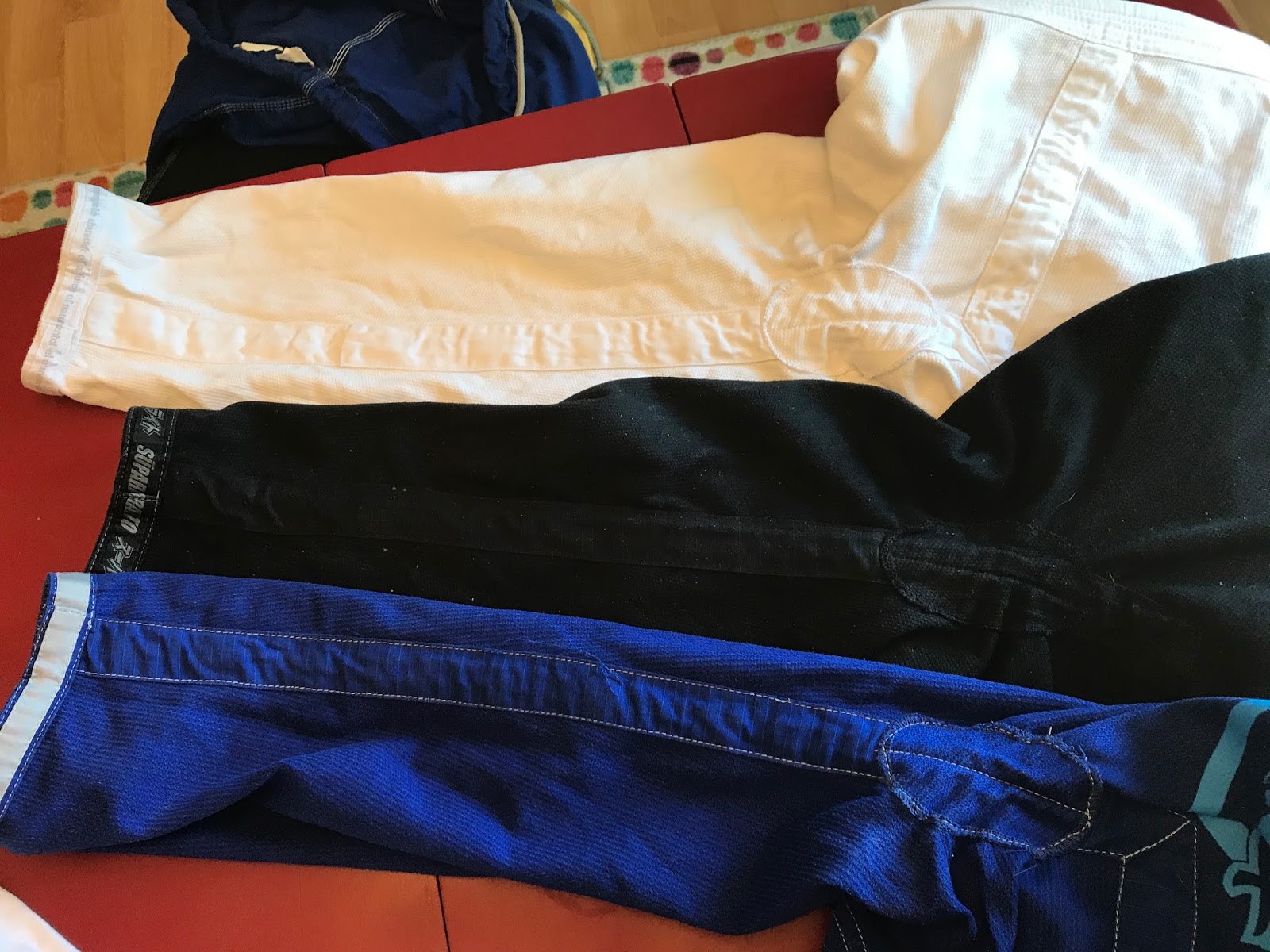
Photos of Sekai (blue), Suparatio (black), and Elemental (white) components. 
Suparatio cuff measurement
Elemental cuff measurement 

Sekai wrist measurement
Stigmata wine stopper used to measure

Collar comparison
Fabric width comparisons


Sleeve cuff comparison
Inside-out arm of jacket comparison

Skirt stitching and vent comparison
Pant logo comparison

Another shot of pant logo
Top of pants comparison
Sekai crotch
Elemental crotch
Suparatio crotch
Fit
Jacket
One of the reasons I appreciate a Fuji gi is their consistent fit. I have owned a few different models of their gis and have been an A2 in all versions (I am 5’8, 165 pounds, 71” wingspan and have a longer torso than legs). The elemental I received is also an A2 and it fits real nice. You will notice that the Elemental sleeve hits just above my writs (as do the Sekai and Suparatio) and the skirt hits in the middle of under-developed glutes (same with Suparatio and Sekai). Through my shoulders and back the gi is a little tighter than my Sekai and about the same as the Suparatio. It is far less tight than my Tatami Estilo 5.0. I am fine with added tightness, as the gi is supposed to be for competition. Range of motion in the Elemental is great! I have had no issues with gripping, twisting, or turning. The opening of the wrist is a little bigger than the Suparatio and Sekai.


Video description of jacket

Pants
The fit of the Elemental pants are remarkably similar to the Sekai and Suparatio. I point this out because the Elemental pants are cotton and the Sekai and Suparatio pants are rip stop. Obviously, the feel of the pants are markedly different. The Elemental pants are made from softer cotton, and not exceptionally rough. The downside of cotton pants is that they tend to get water (sweat) logged during training when heavy sweating occurs. These pants are pretty light cotton. They still get a little baggy/soggy, but nothing compared to my Estilo 5.0 pants or my old Judo gis. As far as cotton gi pants go, they are among the best I have owned. I prefer rip stop (Sekai and Suparatio are the best I have found), but if you have to go cotton, these are some of the better pants you could get.

Video description of pants

Aesthetic
My understanding is that Fuji was going with a more “classic” muted look with this gi. The gi I received is white/off white with grey accents. There is also a blue with cobalt accents (LOL, I am color-blind, but I think it is cobalt). I really dig the look. The jacket says “Fuji” on the left shoulder and the Fuji emblem on the right shoulder. The gi model “Elemental” is written on the bottom of the left lapel. The pants have the Fuji emblem on the left calf. Inside the gi on the skirt taping, the definition of “Elemental” is written. Personally, the look of the Elemental is my favorite of the three gis. Like I have stated before, I like minimalism (I appreciate there is not rubber map, a la the Sekai). To my knowledge, the gi is IBJJF legal.

Durability
I have now rolled and drilled in the Elemental three times and washed it six times. There are no pulled threads, discolorations, or tearing. My Fuji gis have been amazingly durable, and I have no doubt this one will last awhile. This is the first gi I have owned that has a cotton/poly blend jacket. The fabric seems a little more stretchy (think yoga pants, not jeans), and it dries much faster than my other gis. I did a fairly extensive search of the interwebs and could not find a company that outright said they sold a cotton/poly gi top. Tatami sells a “high tech weave” that appears to be something similar to a cotton/poly blend. I did find some judo gis that were cotton/poly. I could not find any complaints on the longevity of those gis. The seams are reinforced, as are the cuffs and skirt. The cotton pants feel sturdy and are reinforced in the usual areas. I am fairly confident this gi will have a longevity that one would expect from a $130 gi, if not better.

*Full disclosure: I love rip stop. That being said, it does rip, usually at stitching points. The cotton twill pants I have owned have held up really well. So, the durability of cotton twill is typically not an issue. I just like the feel and temperature control of rip stop.

Performance
The Elemental is light, stays close to the body, and has great range of motion. The collar is not overly hard to grip, but also not too easy to manipulate. I have rolled in the gi for about 2.5 hours and have yet to be choked. So, collar thinness is not an issue. I roll with several guys that love to grab pant cuffs, usually on the inside, which is illegal in IBJJF. I point this out and they keep doing it. One day I will disqualify them mid-roll and walk away with my arms raised. The pants have not been overly easy to grab, they have not fallen down while rolling and the crotch has not ripped out (I am fairly flexible and have had this happen to pants). I would happily wear the Elemental in a tournament. I have competed in a Sekai for the last three years and have made weight every time. However, the new Elemental is about one pound (466 grams) lighter. That is like a whole box of Cheez-Its….bend your mind around that one next time you are cutting weight.
John trying the Elemental out.

Another video of John testing out the Elemental 

I also had John (a blue belt at our club) test out the Elemental. A quick synopsis of his comments:

Positives
  • Fit was great
  • Weight of top
  • Breathability of fabric
Negatives
  • Cotton pants (he is a Suparatio guy)
Overall
The Elemental is super-light, has a clean look to it and possesses all indications of a durable, quality gi. At full price, the Elemental runs $129, which puts it on the cheaper end of other competition quality ultra-lights (Tatami Estilo leve - $149, Storm Typhoon Ultra lite - $159; War tribe Helium - $169; Hypnotik Feather Lyte - $109, Atama Ultra light - $149). Though I have not tested all of these brands, I would be confident in suggesting the Elemental to anyone at my club in need of a light competition gi.  Also, Fuji is pretty consistent in running sales for their gear. I have purchased both of my Sekais for $100 during their Christmas sale. If you are strapped for cash, know that a sale is probably around the corner.


Where does the Elemental fit into Fuji’s gi lineup? It excels as an ultra-light competition gi. It is lighter and a little cheaper than the Sekai ($169) and Suparatio ($134). That being said, if you wanted a light gi that could be used to train in for multiple days of the week, I would suggest the Suparatio. If you wanted a competition gi that was on the lighter side and could be used for everyday training, I would suggest the Sekai. The Elemental is best served as a gi trained in once a week and/or used for tournaments where weighing in with a gi is required. I am glad that I was able to add it to my rotation.

Sunday, December 25, 2016

Fuji Sekai, Suparaito and Tatami Estilo 5.0 - Throw down!

Hello All!

At our gym and online there are a lot of questions about a specific gi vs another gi. Usually the questions are specific (like which has the stiffer collar). Well, I had the good fortune of buying a new Sekai and Estilo 5.0 during the Black Friday/Cyber Monday deal period and my friend Cop John let me borrow his new Suparatio...and with that a plan was hatched. Below is my best attempt at an in-depth assessment of the Fuji Suparatio, Sekai, and Tatami Estilo.

Some things to know for the review below:

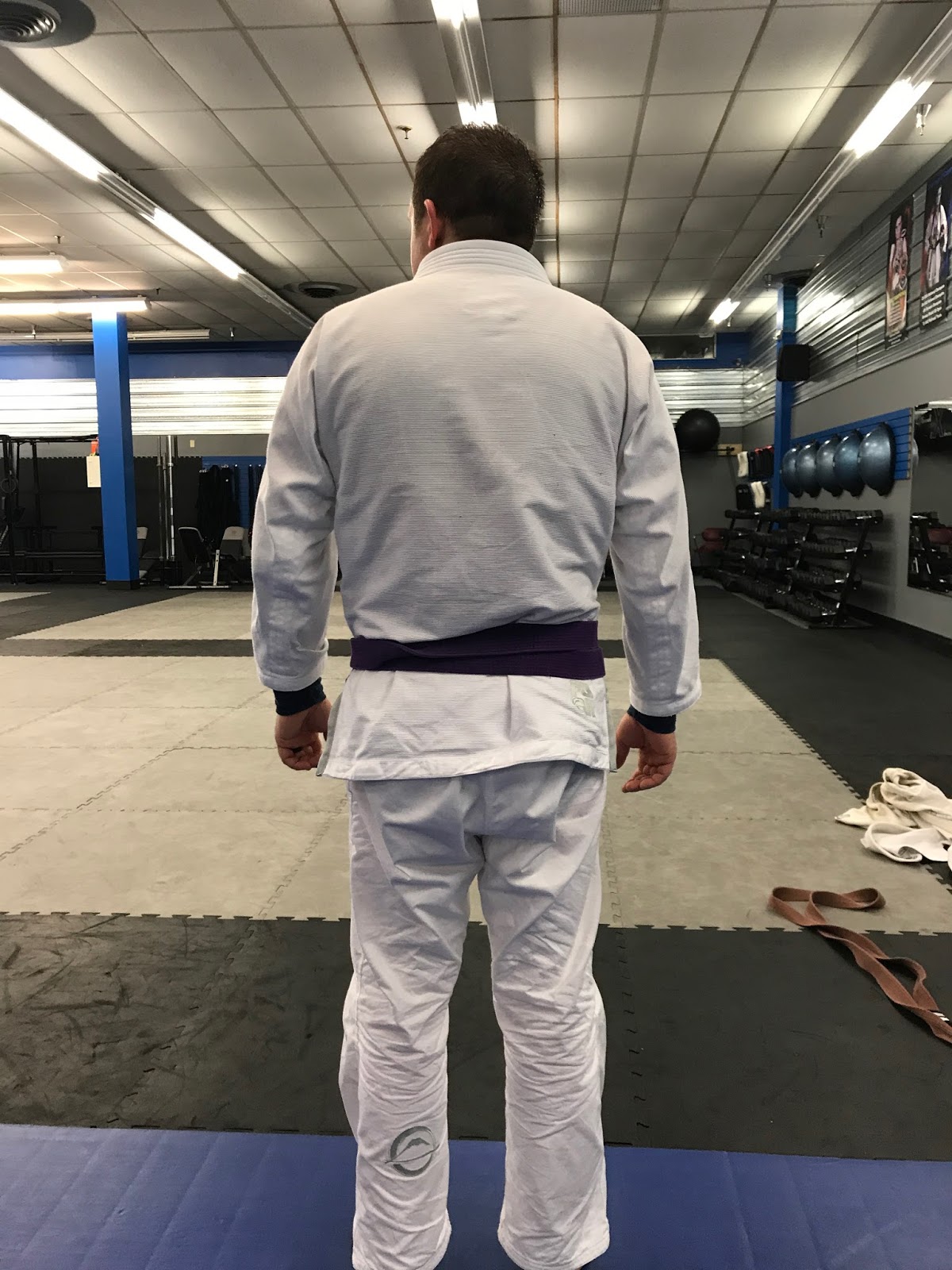
  • I have taken my picture in each of the gis. Sorry, Chris Pratt was unavailable, so you will have to do with my less than stellar mug. 
  • I am 5'8", 165 pounds. I have a 71" wingspan. My torso is longer than my legs. 
  • All 3 of the gis are A2. 
  • I am a 1 stripe purple belt. I have been training for about 6-8 years (a few of those were judo and sambo years). Currently, I try to train 5-6 times a week. This means I go through a lot of gis.
  • An incomplete list of the gi brands I have owned:
    • Fuji (superlight, double weave, Sekai)
    • Howard Combat Kimonos
    • Atama 
    • Keiko Raca 
    • Bad Boy
    • 12NV
    • Probably others I am forgetting
  • I have linked to the companies' webpages, in each description. This should help you if you want to know more about the company. 

FUJI Suparaito

The super burrito (what we call it in our club and how I will refer to it for the rest of this blog) is Fuji's super light offering in their Summit collection. The main points:

  • Amazing Ripstop pants 
  • Pearl weave jacket, 350 gsm (couldn't find an official weight from Fuji, but his was cite several places)
  • Ripstop collar 
  • Contrast stitching


The Sekai is Fuji's "light" gi. They do not suggest on their page that it is part of their Summit line, but they do suggest it is a competition Gi. 
  • The jacket is thicker than the super burrito, but not by much. 
  • Jacket is pearl weave and around 420 gsm...but that is my best guess.
  • The collar does not appear to be ripstop like Suparaito
  • Awesome ripstop pants (same as Suparatio)


The Estilo is another competition gi. Tatami is based in Europe. They report that the gi is the culmination of years of R&D. 
  • 550 gsm pearl weave jacket
  • The collar is much stiffer than the Super burrito or Sekai. 
  • Canvas pants, with a bungee cord string.


Below are videos of me breaking down each of the components of the gis. 


Fit:

     Sekai - Super Burrito
In general, the Sekai and Super Burrito have exceptionally similar fits. Obviously, the Super Burrito top is going to be a little lighter fabric/weave, but the cut is really similar. They both have great range of motion for me. The shoulders, lat and chest fit close with minimal additional fabric, but do not restrict motion. The sleeves on the Super Burrito are a little more narrow (in circumference) than the Sekai. That seems like a small advantage (for the Super Burrito over the Sekai) when people are gripping for sleeve control. The lapel is pretty pliable, which helps with the jacket laying flat, but also allows for easier choking and manipulation when using lapel based guards. 

The pants are amazing. They are super soft ripstop. I have had a Sekai for about a year and wear it 2-3 times a week. They show no sign of breaking down. Several guys at my gym have a Super Burrito and have not reported any issues with the ripstop tearing. The pants fit great and stay tied. Several people have said they really make my booty pop. 

     Estilo 5.0
The Estilo has a much different fit. The jacket has a much tighter cut through the lats. This leads to less fabric to grip, but also a little less range of motion. I have a feeling I will like the restricted fit once I get used to it. Right now, I feel like I can lift my arms as high as I can in the Super Burrito or Sekai. The collar is much stiffer than either of the Fuji gis. In the pictures above you can tell that the fit is far different in the way the gi lays on my body. Several training partners have said it is harder to manipulate the Estilo gi/collar. The down side of the stiffness, is that the Estilo comes out of the belt and has to be tucked in... a lot. I have washed 10-15 times now and the stiffness seems to remain. So, if you like a stiff collar, this is your jacket, if not....  The opening in the sleeves is closer to the Super Burrito, so a little more narrow than the Sekai. 

The pants are canvas. I don't like canvas pants, so I am a little biased. I sweat like a yeti in a sauna, which means they are heavy and soppy (is that a word) after 2 hours of rolling. That being said, the fit and durability is great. If you prefer canvas pants, this is your gi. If you sweat like it is your job, be prepared to waddle around like a pregnant hippo getting out of a marsh. 

Aesthetics:

All 3 gis are pretty great looking. I tend towards minimalism, so the Super Burrito and Estilo are really my speed. I don't love the embroidery on the Sekai shoulders, but I love everything else about it. Obviously, the Estilo also has embroidery on the shoulders, but the white on white gives it a clean look. The contrast stitching gives the Fujis a fun touch. The Sekai has a large rubber map on the inside (it is cool, but annoyed my skin when rolling without a rash guard), the Estilo has a silky neck yolk... it is fun to look at. 

Durability:

     Sekai
This is my second Sekai. I love it and it is impressively durable. Over the course of a year, my first Sekai has been through several comps, 2-3 days of training a week and washing after every use. There are a few pulled stitches, but it has held up better than a majority of the previous gis I have owned (Atama, light weight and double weave fuji, Howard Combat Kimono, etc.). Minimal shrinkage after all the washes (I line dry my gis), I would estimate less than 10%. 

    Super Burrito
Cop John is on his 2nd and 3rd (he bought to on Black Friday) SBs and reports similar durability to the Sekai. He has competed in several tournies with his gi, rolls in it 2ish times a week and washes/line dries after use. He reports minimal wear and tear. I actually took a picture in his new and old SB and couldn't not tell any shrinkage.

     Estilo
I do not have the durability experience/data on the Estilo that I do on the Fujis. That being said, I have worn the Estilo 10-ish times, it seems to be wearing really well. Some of the stitching on the nape of the neck embroidery is starting to pull out. This is really not a big deal, other than it is annoying on a really new gi.
Performance:

All 3 gis perform pretty similarly. As I mentioned above, the main differences:
  • The collar is much stiffer on the Estilo 
  • The ripstop pants are amazing on the Fuji gis
  • The sleeve opening is bigger on the Sekai
  • The heaviness of the fabric from lightest to heaviest goes - Super Burrito - Sekai - Estilo. 
Really, those are the only meaningful competition/performance differences.

Overall/Summary:

First off, I don't think you can go wrong with any of these gis. All 3 of these gis were purchased for between $80-$99 on Black Friday deals. So, if you can get any of these 3 gis between $80-$99, go for it. Honestly, if you have the money, buy two. The only deciding factor would be preference on the differences listed above. 

Normal prices for each gi are around:
  • Super Burrito - $133
  • Sekai - $169
  • Estilo - $169
If you are basing your decision off of these prices, I think the Super Burrito is the way to go, with the near exact durability, construction, and look for $30 less. When I got my blue belt, I bought an Atama Mundial 7 for $189. It held up for a few year, but wore down pretty quick. I amazed at the quality you can get in a lighter gi, for less money. It would appear the adage "you get what you pay for" only rungs true up to a certain price.

Hope this helps. Please email me if there is info. left off you would like to know. 

Bill

Monday, November 16, 2015

Shut up and take my money!....A comment on buying equipment.

So, you have made the decision to start BJJ. You have researched schools, read about the Gracie lineage, and even practiced leg locks on your dog. You are driving to your first night and then you have a moment of panic....what should you wear? Should you stop at the local TKD club and get a dobok?


Maybe this is a gym that wears wrestling singlets???

Ohhh my.....
Have no fear, I can honestly say your best bet is to go to your first class and talk to the instructor. Every gym is a little different. At our gym, we are happy to let people try class for a few weeks and then make a commitment to buy a gi. Other gyms don't use gis. Some gyms will have you buy one the first night. The main thing is not to panic.

With that being said, if the gym you go to uses a gi (and in my opinion training in the gi is really important) you will want to buy a decent one to start out. That is not to say you need to plunk down $350 on a used Shoyoroll, but you should get one that fits well.


A couple reasons:

  1. A nicer gi (roughly between $90-$175) is going to fit well. It seems odd in a rough and tumble sport that fit is important. However, I have owned a good number of gis and I have had several that fit weird. They quickly were at the bottom of my rotation and the money I spent on them was wasted. Honestly, if you stick with BJJ you will end up with 2-5 gis at anytime. If you have one that just doesn't fit right, you won't wear it. 
  2. That money spent is going to force you to commit to coming. I don't like to spend money on useless items. When I plunk down what amounts to 15 - Six Pack and a Pounds, I am going to make sure I use that item. 
  3. A new gi makes you feel badass! You are going to wear it around your house when you get it. That is fine, take some pictures, trash talk the mirror, try to choke your significant other out with the lapel, live your life. 
The main thing to remember, you need to ask your instructor what they prefer. Our gym is pretty loose with the type of stuff you can wear. Some gyms only want white or blue gis. Don't plunk down what amounts to 30 - KFC $5 Fill-ups and then have to sell it. If your gym has no rules, talk to your gym-mates, try on their gis. You are going to find they are really excited to share their knowledge. Currently, I roll in a 2 Fuji gis and a 12NV gi. They range in price between $120-$150. I previously owned a $200 Atama and really couldn't tell the difference between it and my cheeper gis.  

As far as other equipment you might want to invest in (probably over your first 6-12 months):
  • A mouth piece. I chipped my tooth in June of this year. Like all issues, I just assumed it would resolve itself. It sure didn't, I further chipped it 3 months later. My dentist was impressed with how bad I chipped it! She did not give me a reward for my insolence. She did give me a $400  bill (that is 40 - Drunken Noodles at Ginger Thai). Protect those pearly whites. Most $5-$10 mouth guards will do. 
  • A pair of grappling shorts. You can get by with basketball shorts or athletic shorts for awhile. But, eventually they will get annoying. They will slip off, they don't stretch as well. There are tons of different types of grappling shorts on the market. In my experience, grappling shorts below $20ish dollars are crap. Anything above will do just fine. A $60 pair of shorts is not 2x better than a $30 pair. I just got a pair of Jaco shorts from BJJHQ.com . It has some great rolling deals, if you are in to that type of thing.
Checkout my new Jaco shorts.
  • Compression shorts, nut-cup, bra with reinforced cups. Mix and match for your primary and secondary sexual trait needs.
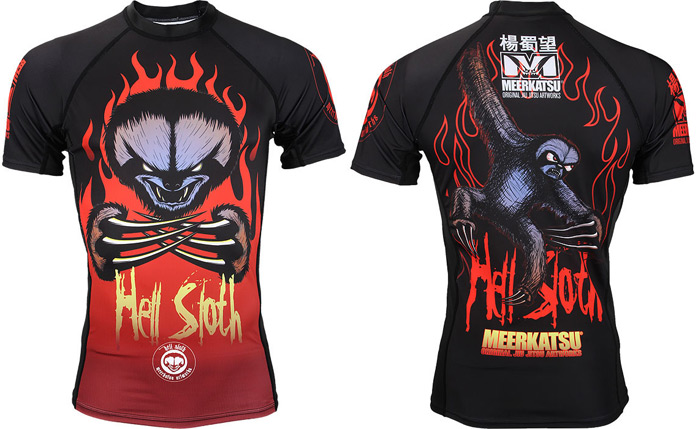
  • A rash guard/compression shirt. This is one of those things you don't have to drop a lot of money on. I rolled in a $5.99 Champion compression shirt for my first 5-6 years and thought it was great. I upgraded to a $30 compression shirt from Meerkatsu and really like it. You can get rash guards for $60 (if they are blessed by Marcelo Garcia....I hear you will get the power of flight). The upside of a more expensive rash guard are the cool graphics and the quality of the shirt. There are some really neat looking rash guards on the market. The other big advantage of a more expensive rash guard is the quality of the material. It is thicker and holds shape longer. Finally, you will find both long sleeve and short sleeve. I like to rub my arm hair in peoples' faces, so I go short. 
This is my current rash guard
That is about it. You really can get by spending $200-$250 dollars over the course of your first year. You can also drop well over a grand if you have that money. However, the more you compete and the more serious you get, the nicer equipment you will probably want. Also, the more you train, the more equipment you will need...because you will wash your gi. Believe me, the last thing you want to be is the smelly kid.